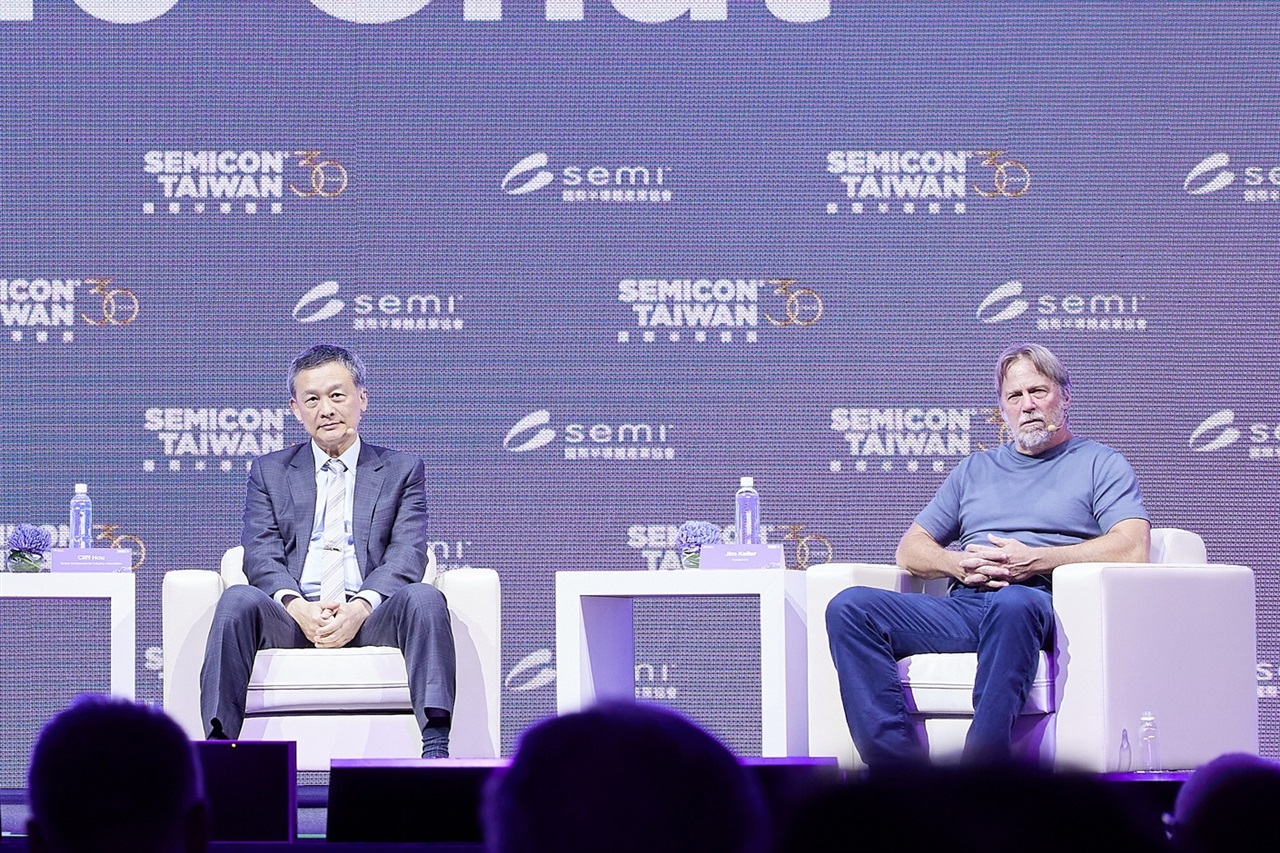
Moore’s Law Isn’t Done Yet: A Big Vote of Confidence from SEMICON Taiwan
At a fireside chat during SEMICON Taiwan, two of the semiconductor industry’s most influential figures pushed back on the popular narrative that Moore’s law is over. The discussion, featuring TSMC executive Cliff Hou and renowned chip architect Jim Keller, delivered a clear message: innovation in chipmaking is far from slowing down, and the roadmap for more compute at better efficiency remains robust.
For years, skeptics have argued that transistor scaling has hit hard physical and economic limits. The costs of leading-edge nodes are rising, yields can be challenging, and squeezing more performance from ever-smaller geometries is tougher than it used to be. Yet the tone from the stage in Taiwan was unmistakably optimistic. The core idea behind Moore’s law—steadily increasing compute density and performance—continues, even if the ways we achieve it are evolving.
What “Moore’s law isn’t dead” really means today
– Transistor scaling still matters: Gate-all-around transistors, backside power delivery, new materials, and High-NA lithography are pushing the boundaries of traditional scaling.
– System-level scaling is accelerating: Even when single-die scaling slows, engineers are achieving Moore’s law-like gains through advanced packaging, chiplets, and 3D stacking, combining multiple specialized dies into one powerful system.
– Architecture is doing more heavy lifting: Smarter chip architectures, domain-specific accelerators, and tightly integrated memory/cache strategies are extracting more work per watt and per transistor.
– Better tools, better co-optimization: AI-assisted electronic design automation, design-technology co-optimization, and software-hardware co-design are compounding gains beyond what raw transistor counts imply.
Why this matters for the next wave of computing
– AI and machine learning: Training and inference workloads demand massive compute density and power efficiency. Continued scaling and packaging breakthroughs translate directly to faster models and lower energy bills.
– Data centers and cloud: Every watt saved and every percentage point of performance per watt compounds across thousands of servers—lowering operational costs and carbon footprints.
– Consumer devices: More capability in the same or smaller power envelope means smarter phones, laptops, wearables, and XR devices with longer battery life and more responsive experiences.
– Automotive and edge: Advanced driver-assistance systems and edge AI benefit from higher performance within strict thermal and cost constraints.
What to watch next
– 2 nm and beyond: New device structures and backside power delivery aim to keep improvements coming at advanced nodes.
– Advanced packaging: 2.5D/3D integration, interposers, and hybrid bonding enable chiplet-based designs with near-monolithic performance.
– Chiplet ecosystems: Standardized interfaces and robust IP libraries are unlocking faster time-to-market and more flexible product roadmaps.
– Memory proximity: Moving memory closer to compute, and stacking it vertically, reduces latency and boosts throughput for data-hungry workloads.
– Software-aware silicon: Co-designing hardware with compilers, frameworks, and runtime systems ensures that real-world applications capture the full benefit of new nodes and architectures.
A more nuanced Moore’s law
The original observation described a regular cadence of transistor doubling. Today, progress is more multidimensional. Gains come from a blend of smaller transistors, smarter layouts, denser interconnects, new packaging, and architectural breakthroughs. The headline takeaway from SEMICON Taiwan is that when you combine these levers, the industry can still deliver the performance, efficiency, and cost-per-compute improvements that power modern technology.
The bottom line
Declaring Moore’s law “dead” overlooks the rapid advances happening across every layer of chipmaking. The sentiment from leading voices at SEMICON Taiwan is clear: the engine of progress is still running—just with more gears than before. For anyone watching AI, cloud, mobile, and automotive electronics, that’s a strong signal that the next chapters of semiconductor innovation are already underway.


