Apple’s First Foldable iPhone Faces a Tough Durability Reality Check
Apple’s long-awaited foldable iPhone, widely referred to as the iPhone Duo, may represent a major step forward for the company, but early durability testing shows that even Apple cannot completely escape the weaknesses that come with foldable phone design.
Modern foldable smartphones have improved dramatically since the first wave of flexible-screen devices arrived in 2019 and 2020. Today’s models are tougher, more refined, and better protected against dust, water, and everyday wear. Many can survive harsh bend tests without instantly becoming unusable. Apple has clearly had years to study the mistakes and improvements made by Android foldable makers, which gives the iPhone Duo a stronger starting point than early foldables had.
Still, a foldable smartphone is not the same as a traditional flat phone. It has more moving parts, a flexible inner display, a complex hinge, and a design that must balance strength with the ability to open and close thousands of times. That makes durability a much bigger challenge, even for Apple.
One of the biggest concerns revealed during testing is the hinge. Although the iPhone Duo is expected to carry an IP68 rating for dust and water resistance, that rating does not mean the foldable mechanism is immune to dirt, sand, or debris in every situation.
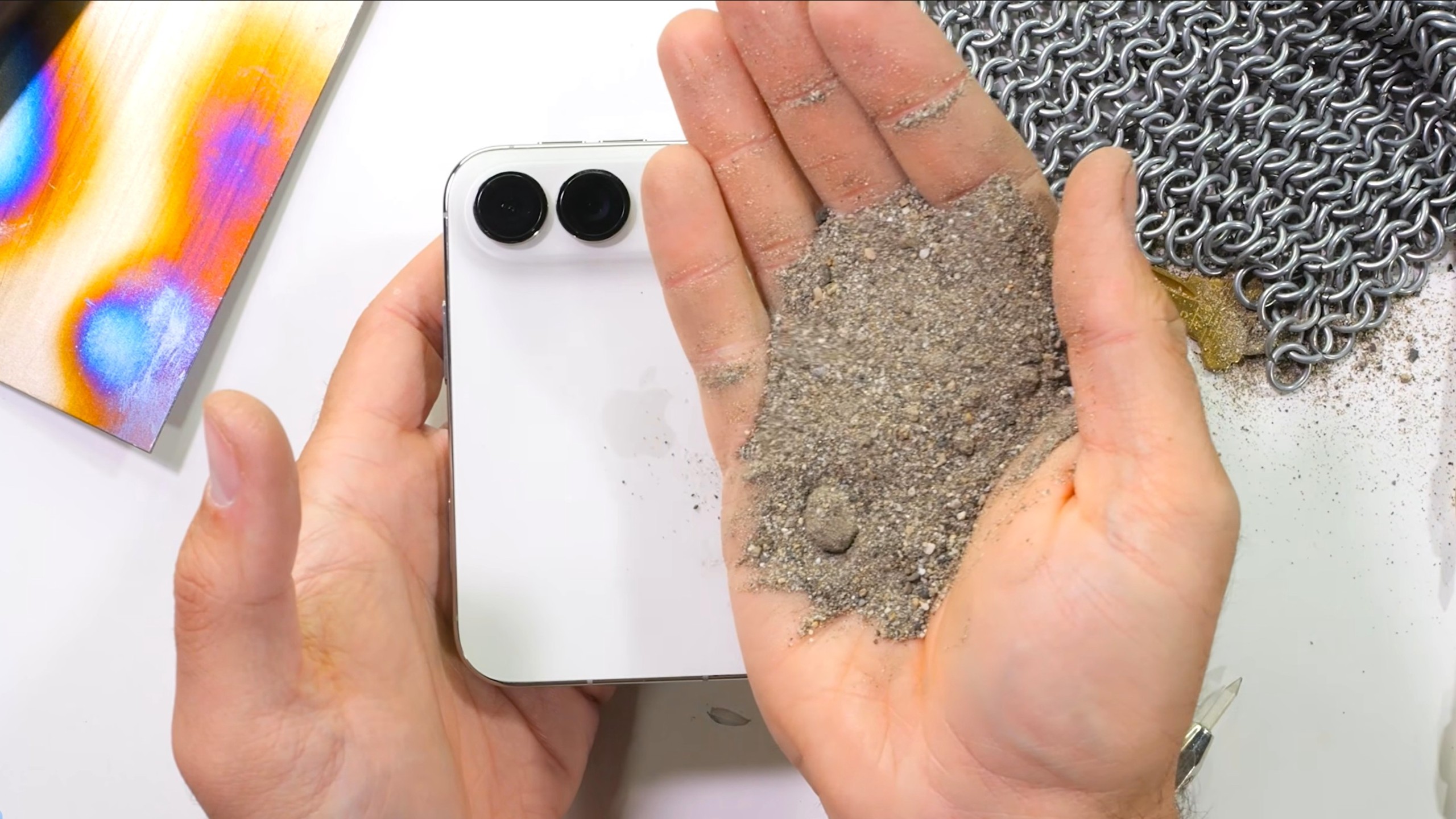
During an extreme durability test involving sand, soil, and dirt, the iPhone Duo’s hinge appeared to struggle after heavy contamination. Once debris entered the folding mechanism, the device no longer closed fully. Even the built-in magnets could not pull the phone completely shut.
This kind of exposure is far more intense than what most users would experience daily, but it highlights an important warning: foldable phones and beaches may still be a risky combination. Fine sand and dust can be especially troublesome for hinges, and the iPhone Duo seems no exception.
The inner flexible display also showed both strengths and weaknesses. Apple’s nano-texture-style cover appears to help hide scratches better than some glossy foldable screens, especially because the matte layer can make marks less visible under certain lighting. That could be a useful advantage for users worried about the softer surface typically found on foldable displays.
However, the bend test revealed a more serious issue. When the iPhone Duo was bent against its natural folding direction, the frame did not immediately snap or break apart. That is good news from a structural standpoint. But the internal AMOLED panel reportedly suffered damage under the stress, leading to display failure.
This is a major reminder that a foldable screen can be damaged even when the outer body appears mostly intact. Unlike a standard iPhone, where the rigid glass and frame offer more predictable protection, the iPhone Duo’s flexible display remains vulnerable to pressure, twisting, and incorrect bending.
Repairs could also be extremely expensive. A damaged inner foldable display may cost around $1,000 to replace, making accidental damage a serious financial concern for buyers. For a device expected to be Apple’s most expensive iPhone ever, durability and repair costs will likely be major talking points.
The takeaway is simple: the iPhone Duo may be an impressive piece of engineering, but it is still a foldable phone. It should handle normal use well, but users will need to be more careful than they would with a regular iPhone. Avoiding sand, dirt, excessive pressure, and bending the phone in the wrong direction will be essential to keeping it in good condition.
Apple may have learned a lot from years of foldable smartphone development across the industry, but physics still applies. A thinner, flexible, hinge-based design will always involve compromises. The iPhone Duo could become one of the most exciting iPhone releases in years, but anyone considering buying it should understand that premium design does not make it indestructible.