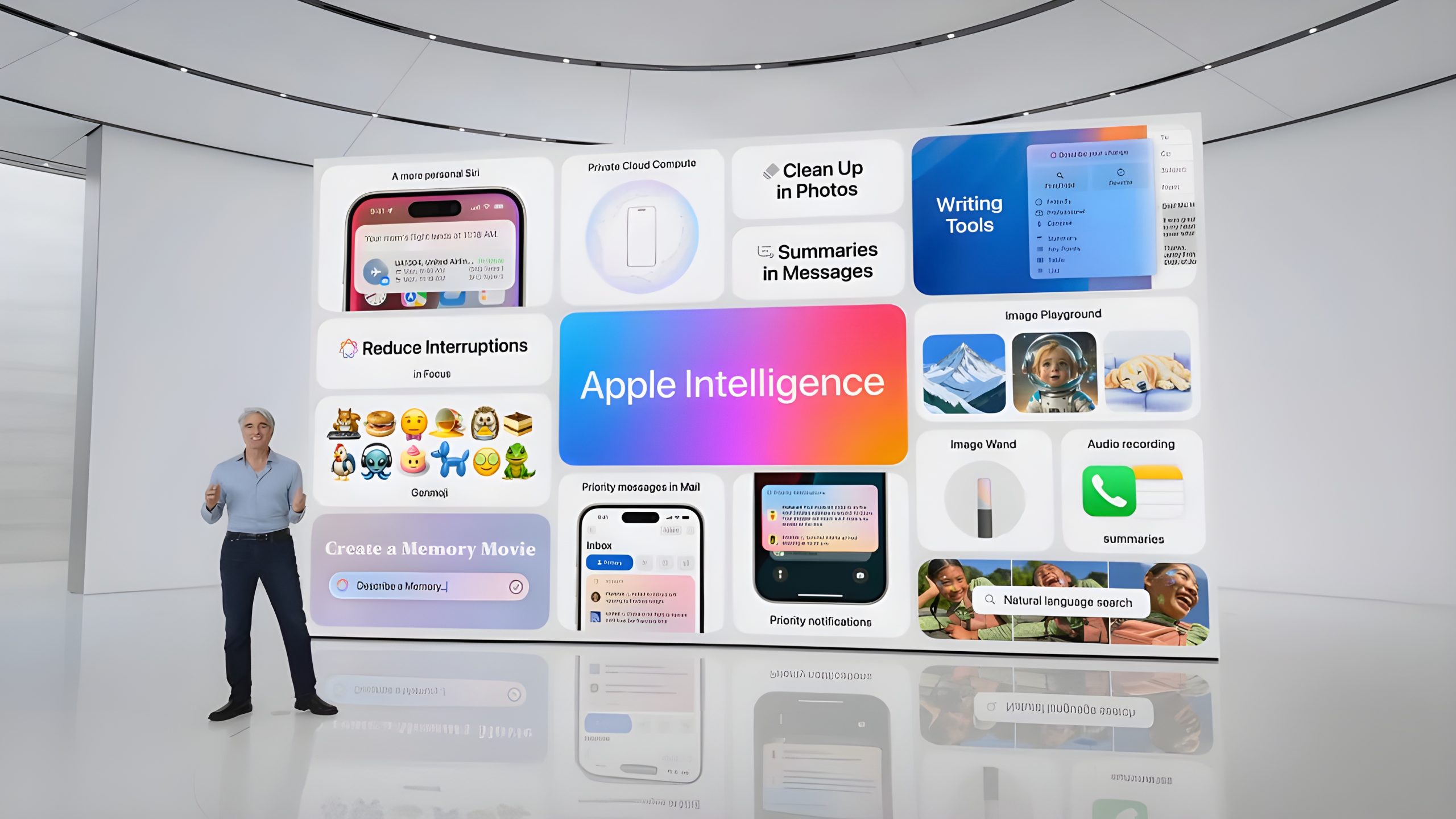
Apple reportedly pivots Siri overhaul to a custom Google Gemini model while keeping privacy front and center
Apple is said to be reshaping its Siri strategy, turning to Google to build a custom Gemini-based large language model that would power the assistant’s most complex cloud tasks under Apple’s Private Cloud Compute framework. The move, detailed by Bloomberg’s Mark Gurman, suggests Apple is prioritizing rapid capability gains and reliability for the revamped Siri experience under the Apple Intelligence umbrella.
According to the report, Apple will pay Google to tailor a Gemini model that runs on Apple’s own privacy-focused cloud. The idea is a split workload: straightforward requests are handled on-device using Apple’s local models, while heavy-duty requests are securely offloaded to Apple’s servers. Those servers process encrypted, stateless data—meaning Apple does not keep user data—to preserve the strong privacy posture the company has been emphasizing.
How the new Siri is structured
– Query planner: The decision-making brain that figures out the most efficient way to complete a request. It can choose between web search, tapping personal data like calendars or photos, or invoking third-party apps via App Intents so users can complete in-app actions without opening the app.
– Knowledge search system: A general-knowledge layer that lets Siri answer trivia and factual queries directly, reducing reliance on external AI services or generic web results.
– Summarizer: A core Apple Intelligence tool that can leverage third-party models such as ChatGPT to condense text or audio. Examples include:
– Notification digests
– Summaries in Mail and Messages
– Safari webpage summaries
– Writing assistance
– Audio recaps
Under this hybrid architecture, Apple continues using on-device models for privacy and speed, while routing complex queries to its private cloud. That’s where the custom Gemini model would step in. The processing occurs without retaining user data, aligning with the company’s Private Cloud Compute design.
Why Apple may be making the change
Earlier reporting indicated Apple engineers faced challenges delivering consistent Siri performance across apps and in sensitive scenarios such as banking. Partnering on a bespoke cloud model could help close capability gaps more quickly while preserving Apple’s control over infrastructure, interfaces, and privacy safeguards. Publicly, the enhanced Siri is still expected to be presented as a core Apple technology running on Apple’s backend with a unified experience across devices.
What users can expect in upcoming Apple Intelligence releases
Apple has been preparing a slate of Siri-centric features targeted for a Spring 2026 iOS update (likely iOS 26.4). Highlights include:
– In-app Actions: Perform context-aware tasks by voice inside supported apps, like adding items to a grocery list, sending a message in your preferred chat app, or playing specific music.
– Personal Context Awareness: Use personal data to deliver tailored help—for instance, finding a podcast mentioned in a Messages thread.
– On-Screen Awareness: Understand what’s currently on your display and execute agent-like tasks based on that context.
What it means for privacy and performance
– Privacy: Sensitive requests remain protected through on-device processing or Apple’s privacy-hardened cloud, with encrypted, stateless handling that prevents data retention.
– Capability: A custom Gemini model should boost accuracy, reasoning, and reliability for harder queries, enabling richer Siri responses and actions.
– Consistency: The query planner, knowledge base, and summarizer work together so Siri can decide when to search, when to act in apps, and when to summarize information—without the user juggling different tools.
If Gurman’s reporting holds, Apple’s Siri upgrade plan is evolving into a pragmatic blend of in-house innovation and a tightly integrated third-party model, designed to bring a smarter, more helpful, and more private assistant to millions of devices.


