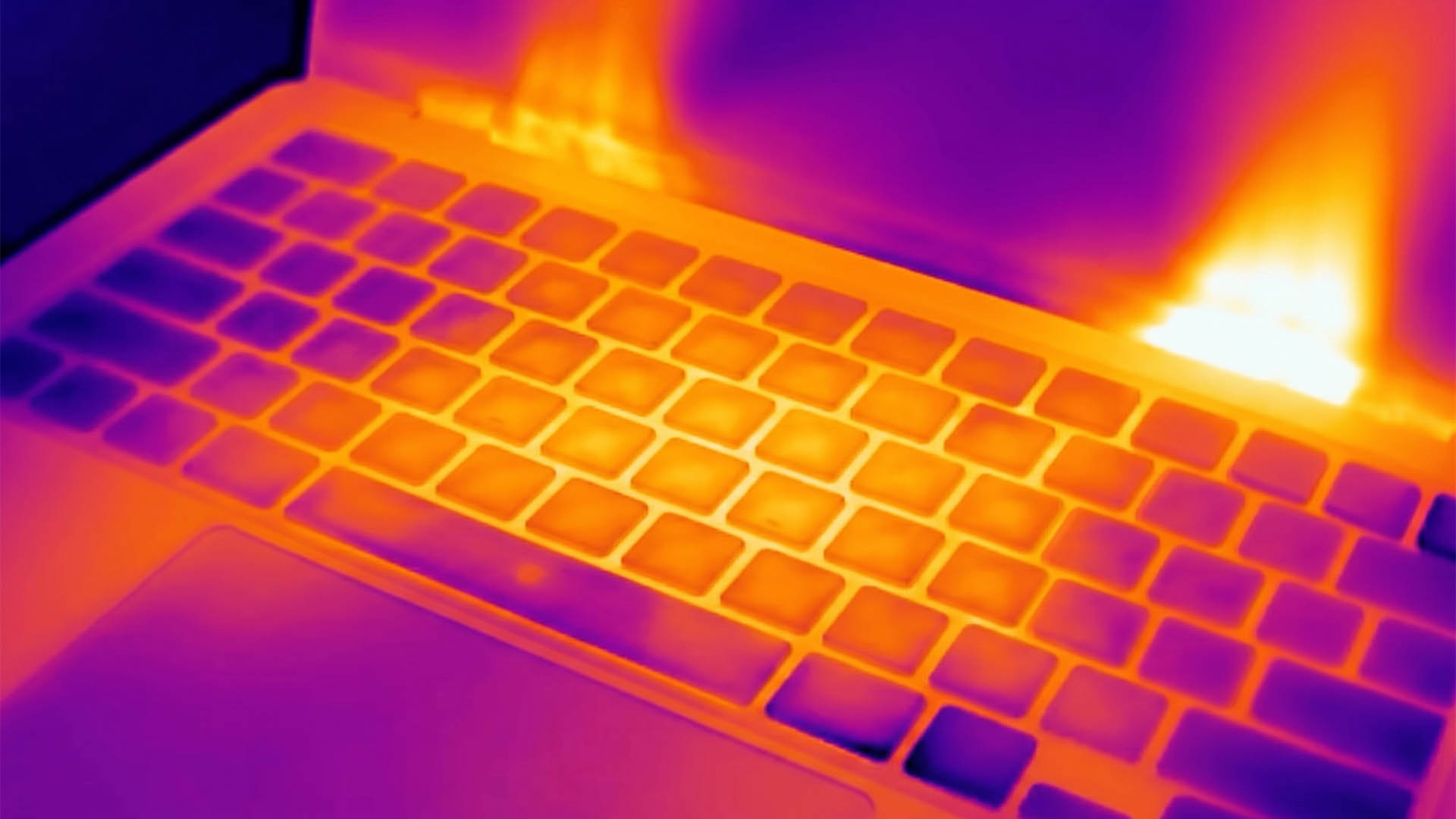
14-inch M5 Max MacBook Pro buyer seeks refund after repeated thermal throttling during AI workloads
A buyer who spent A$8,949, or around $6,362, on a 14-inch M5 Max MacBook Pro says the laptop repeatedly suffered severe thermal throttling while running demanding AI workloads. After receiving a replacement unit and encountering the same issue again, the owner decided to pursue a refund rather than continue using a machine that could not maintain expected performance under sustained load.
The case has drawn attention because the purchase was made before Apple’s latest price increase. The same high-end 14-inch M5 Max MacBook Pro configuration is now listed at A$11,799, or about $8,386. That leaves the buyer facing a potential A$2,850 difference, roughly $2,025, if refunded only at the original purchase price and forced to buy again at current pricing.
According to the owner, the goal is to use Australian Consumer Law to request a remedy that reflects the current replacement cost of the device. Under Australian Consumer Law, repeated failures involving the same issue may be treated as a major failure, and when a major failure occurs, the consumer can typically choose between a refund, replacement, or repair.
The main complaint centers on thermal performance. The M5 Max is a powerful Apple Silicon chip, and placing it inside a compact 14-inch chassis appears to create challenges when the system is pushed hard for long periods. AI workloads are especially demanding because they can stress the CPU, GPU, Neural Engine, and unified memory system continuously, generating heat that smaller laptops may struggle to dissipate.
The 14-inch MacBook Pro is designed to offer strong performance in a portable body, but there are physical limits to how much heat a smaller notebook can handle. Compared with the 16-inch MacBook Pro, the smaller model has less internal space for cooling hardware. A larger chassis can generally accommodate a more capable thermal solution, allowing the chip to maintain higher performance for longer before temperatures force clock speeds down.
If the buyer succeeds in receiving a refund based on the new price, the difference needed to move to a 16-inch M5 Max MacBook Pro could reportedly be far smaller, around A$700, or roughly $500. That larger model would likely be better suited for sustained AI tasks thanks to its bigger body and improved cooling potential.
The situation highlights an important point for MacBook Pro buyers: the most powerful chip is not always the best fit for the smallest chassis. For short bursts of performance, a compact high-end laptop can be extremely fast. But for long AI model runs, rendering sessions, code compilation, or other heavy professional workloads, thermal headroom matters just as much as raw chip performance.
Apple’s unified memory architecture remains a major advantage for AI work, especially when handling large models that benefit from high memory bandwidth and shared access across processing units. However, even a strong memory system cannot overcome the basic thermal limits of a thin and compact notebook when workloads remain intense for extended periods.
This case may also raise broader questions about whether future MacBook Pro models need stronger cooling designs, such as a vapor chamber, to better support top-tier Apple Silicon chips in smaller sizes. As AI workloads become more common among professionals and enthusiasts, sustained performance will be just as important as peak benchmark numbers.
For anyone considering a 14-inch M5 Max MacBook Pro, the key takeaway is simple: portability comes with trade-offs. The 14-inch model may be ideal for users who want high performance in a smaller package, but those planning to run heavy AI workloads for long sessions may be better served by the 16-inch MacBook Pro, where the larger chassis can better manage heat and maintain performance over time.