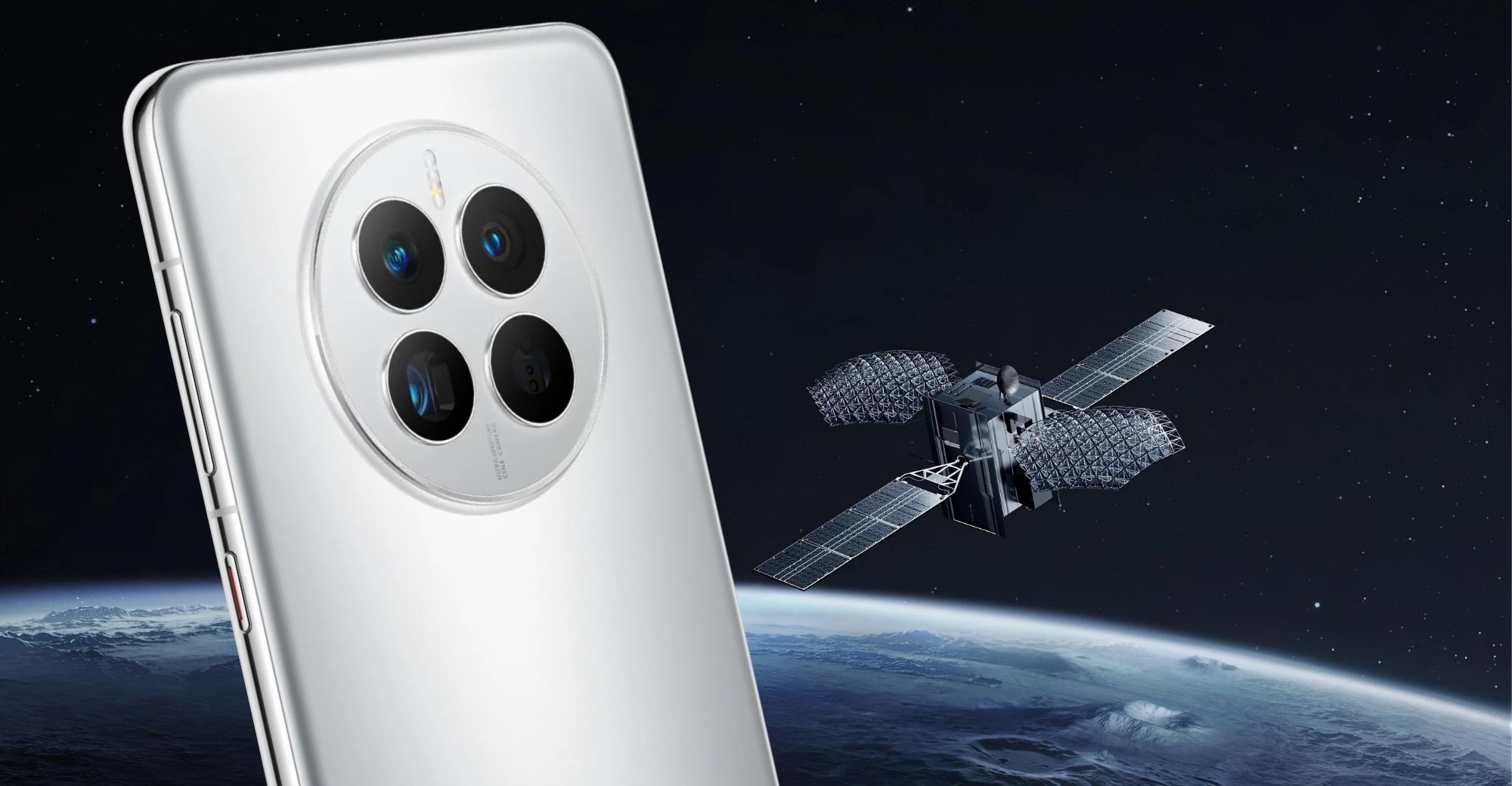
Huawei Paved the Way for Satellite Messaging Before Apple’s Latest Announcement
In the world of satellite communications, Apple’s recent announcement at the WWDC 2024 keynote regarding its ‘Messages via satellite’ feature for the iPhone 14 series has been met with much excitement. Slated for release alongside iOS 18 later this year, this novel addition will allow users to send and receive text messages, emojis, and other forms of communication via the iMessage app, even in the absence of an internet connection. But Apple’s announcement is not the pioneering move it might seem, as its technology counterpart Huawei introduced a similar feature with its Mate 50 series.
Huawei’s Innovation in Satellite Communication
Huawei, defying U.S. trade sanctions, introduced satellite messaging capabilities with their Mate 50 series back in September 2022. This enabled users to send messages in areas bereft of network coverage. Over time, Huawei didn’t just rest on its laurels; the company enhanced this technology, adding support for multiple locations to create trajectory maps that could scan codes without significant battery drain. Stepping into this space, Huawei has not only matched but exceeded Apple’s capabilities by releasing the Mate 60 Pro – the sole smartphone capable of satellite calling to date, a function currently unavailable with Apple devices.
The Technological Edge of Huawei’s Pura 70 Pro and Pura 70 Ultra
Huawei’s commitment to technological leadership did not stop at messaging. The latest models from the company’s flagship, the Pura 70 Pro and Pura 70 Ultra, extend these capabilities to the sending of images, without the need for a cellular network or wifi connection. This functionality positions Huawei as a leader in the field, offering features that are yet to be seen on Apple devices.
The Global Reach of Satellite Messaging
While Huawei has arguably surged ahead in innovation, the reach of its satellite messaging is geographically limited to China, due to the trade restrictions imposed on it. Apple, on the other hand, has expanded its Emergency SOS via satellite to include regions beyond the U.S. and Canada, despite introducing the complementary ‘Messages via satellite’ functionality after Huawei’s industry-first.
Implications of Trade Politics on Innovation
It is worth considering the possibility that, without the imposition of trade sanctions, Huawei might have expanded its satellite communication features globally, likely giving them an even larger technological foothold. Nonetheless, even with its limited market, Huawei has demonstrated that it can contend with, and in some cases surpass, Apple’s offerings in terms of satellite-enabled communication technologies.
As the landscape of satellite communications continues to evolve, with major players like Huawei and Apple at the helm, users can expect to see more innovative features that will transform the way we connect. Huawei’s developments in this arena exemplify the emerging trend of satellite communication, providing a glimpse into a future where loss of network coverage does not equate to a loss of connectivity.


