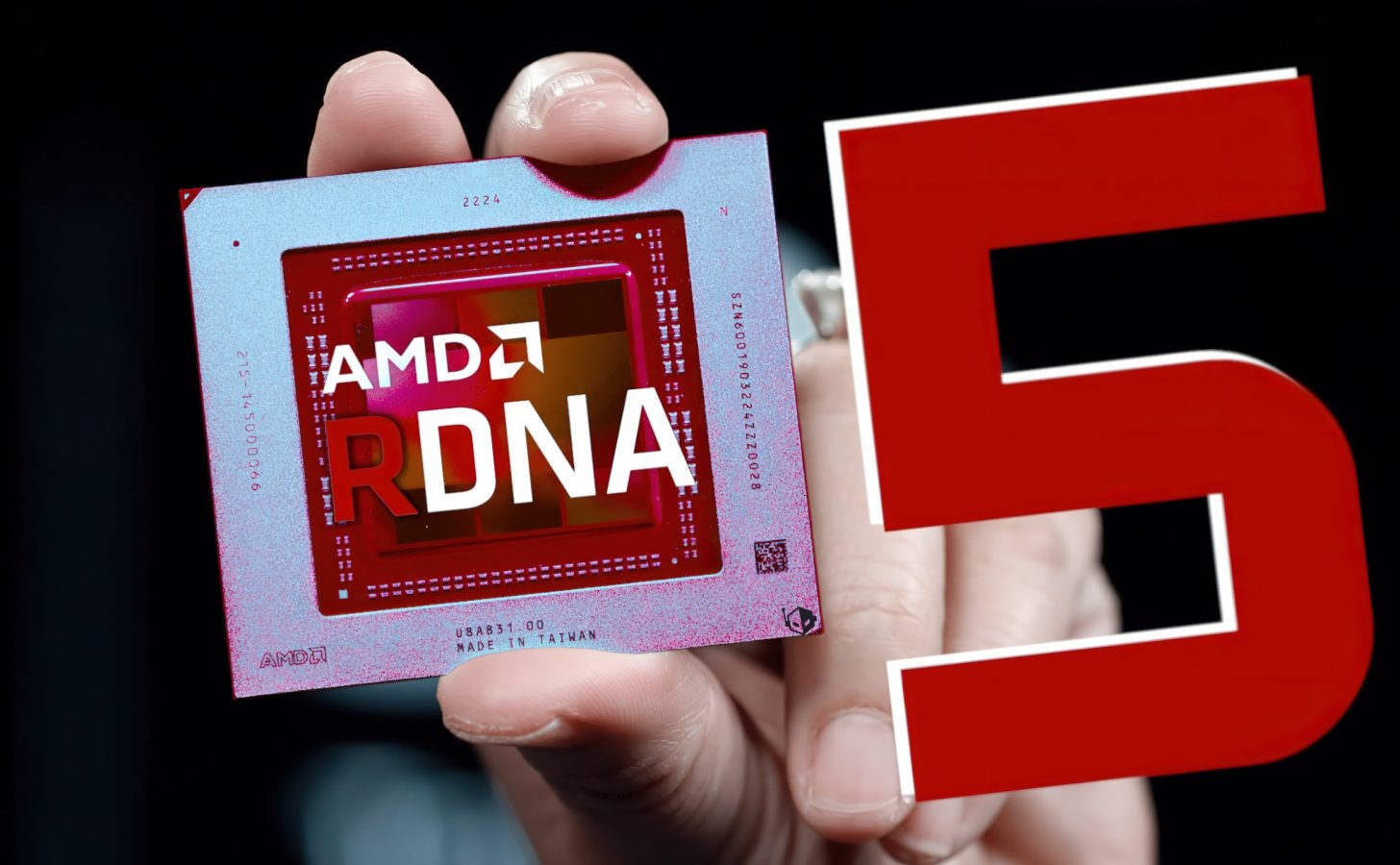
AMD RDNA 5 leak suggests next-gen GPUs could reach up to 3.4 GHz
AMD’s next-generation RDNA 5 graphics architecture is still likely years away from release, but early rumors are already painting an interesting picture of what the company may be targeting. A fresh leak suggests that AMD could be aiming for noticeably higher GPU clock speeds with RDNA 5, potentially reaching between 3.1 GHz and 3.4 GHz.
The information reportedly comes from comments shared by known hardware leaker Kepler_L2 during a discussion about AMD’s future APU graphics performance. According to the claim, internal AMD material points to a target frequency range of 3.1 GHz to 3.4 GHz for RDNA 5.
That figure is particularly interesting because RDNA 5 is expected to power a wide range of future AMD graphics products. This may include next-generation Radeon desktop graphics cards, mobile GPUs, and integrated graphics solutions inside upcoming chips such as the rumored Medusa Halo SoCs.
However, it is important to treat the leak with caution. The reported 3.1 GHz to 3.4 GHz range has not been confirmed by AMD, and it is not clear whether these frequencies apply to dedicated graphics cards, integrated GPUs, or the RDNA 5 architecture in general. Since different products have different power limits, cooling designs, and performance targets, clock speeds could vary significantly across the lineup.
If these numbers do apply to future discrete Radeon GPUs, RDNA 5 could bring a meaningful increase in frequency over AMD’s current high-end RDNA 4 offering. The Radeon RX 9070 XT, for example, features a boost clock of around 2.97 GHz. A jump to 3.1 GHz would put RDNA 5 roughly 4% higher in clock speed, while a 3.4 GHz target would represent an increase of about 14%.
That sounds promising, but higher clock speeds alone do not guarantee the same level of performance improvement. GPU performance depends on several factors beyond frequency, including compute unit count, architectural efficiency, memory bandwidth, cache design, power limits, driver optimization, and workload type.
RDNA 5 is also rumored to bring deeper architectural changes, including possible adjustments to AMD’s Workgroup Processor design. If true, those changes could have a larger impact on real-world gaming and compute performance than clock speeds alone.
For gamers and PC hardware enthusiasts, the possibility of higher RDNA 5 frequencies is still exciting. AMD has been steadily refining its GPU architectures, and a combination of faster clocks, improved efficiency, and architectural upgrades could make its next-generation Radeon lineup highly competitive.
As for when RDNA 5 graphics cards might arrive, current expectations point to a possible launch window in mid to late 2027. An early 2028 release is also possible, depending on AMD’s development schedule and product roadmap.
For now, RDNA 5 remains far from launch, and these details should be viewed as early, unofficial information. Still, if AMD is truly targeting up to 3.4 GHz with its next-generation GPU architecture, the company’s future Radeon graphics cards could deliver a notable step forward in both frequency and overall performance potential.