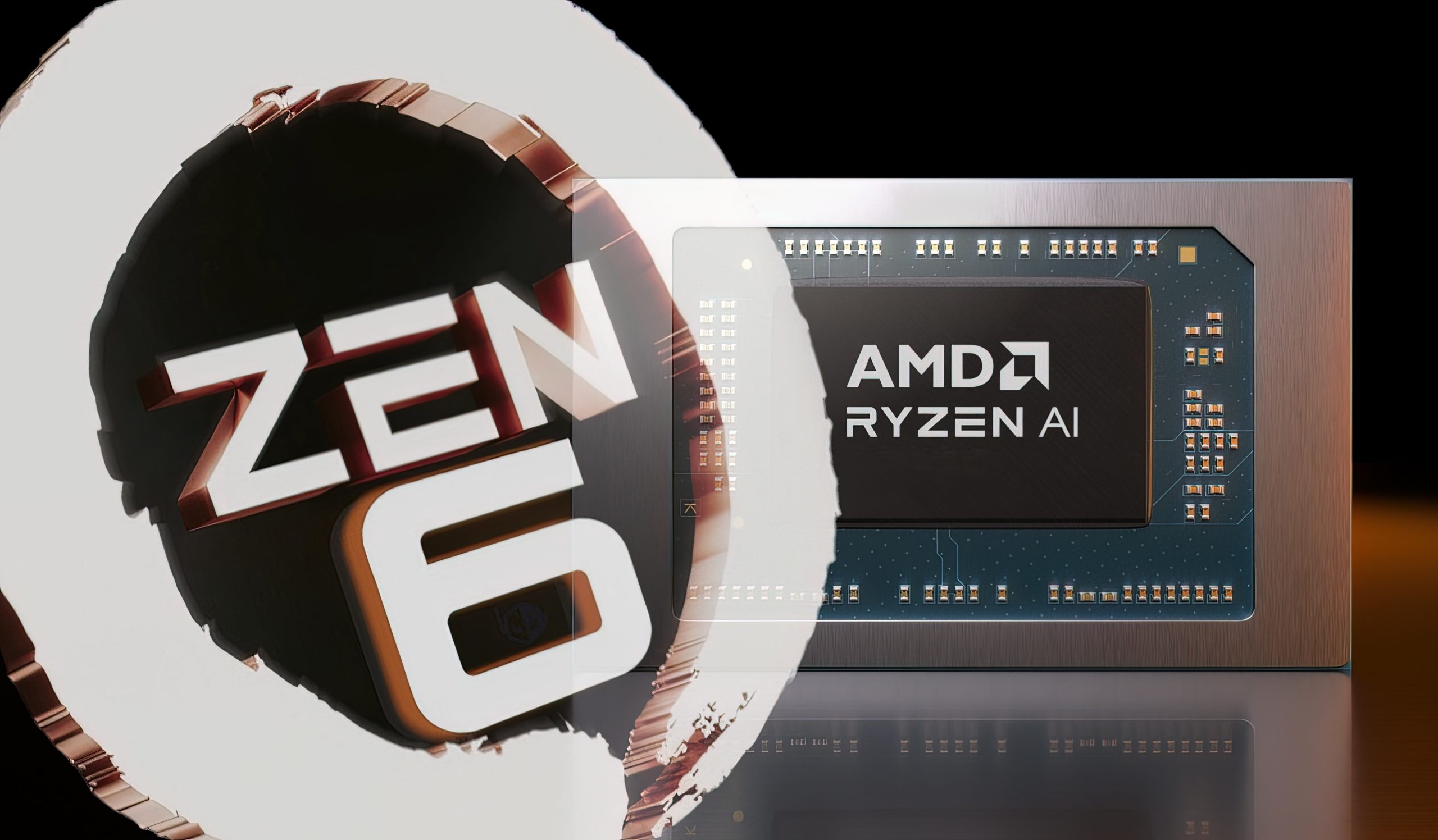
AMD’s upcoming Zen 6 “Medusa Point” mobile processors are shaping up to be a major step forward for mainstream laptops, and a new shipping manifest leak suggests buyers will have more choices than expected. Instead of sticking to one power class, Medusa Point is reportedly headed to market in both low-power 28W and higher-performance 45W configurations, giving laptop makers room to build everything from thin-and-light productivity machines to more powerful performance-focused notebooks.
A newly spotted shipping log points to two distinct Medusa Point categories: “High-TDP” and “Low-TDP” SKUs. That matters because earlier sightings mainly highlighted a 45W part, which led to speculation that AMD might be moving away from the 28W range. This latest information suggests the opposite: AMD appears to be keeping 28W models in the lineup, positioning them as a direct follow-up to current 28W-class laptop chips while also offering 45W options for systems that can handle more heat and power.
Another key detail mentioned in the manifest is the move to a new FP10 socket. Current-generation mainstream mobile parts use the FP8 socket, so this marks a platform transition for Zen 6 laptops. FP10 is said to be roughly 6% larger than FP8, while still remaining smaller than the larger FP11 socket used by higher-end mobile silicon. For consumers, socket changes usually translate into new laptop designs and refreshed motherboard layouts, which often arrive alongside next-generation features and performance tuning from OEMs.
On the performance side, Medusa Point is rumored to scale significantly depending on the model. Higher-end configurations are reported to reach as many as 22 CPU cores, using a mix that includes 12 Zen 6 cores on a dedicated chiplet plus additional classic, dense, and low-power cores. Meanwhile, midrange tiers such as Ryzen 5 and Ryzen 7 variants are expected to use a 4-core classic + 4-core dense + 2 low-power core setup. Even with that reduced CPU layout, those models are still rumored to carry the same integrated graphics configuration: an RDNA 3.5-based iGPU with 8 compute units, which could help maintain consistent graphics performance across multiple price points.
The appearance of both 28W and 45W versions also lines up with practical laptop design needs. Many mainstream Ryzen 5 and Ryzen 7 laptops target efficiency and battery life first, so lower-TDP options make sense there. At the same time, 45W models allow manufacturers to push higher sustained performance in thicker chassis with better cooling—useful for creators, developers, and users who regularly run heavier workloads.
Here’s a simplified recap of what’s currently rumored for AMD Medusa Point mobile CPUs:
Architecture: Zen 6
Core count range: 10 to 22 cores (depending on model)
Power targets: 28W and 45W variants
Integrated graphics: RDNA 3.5 with 8 compute units
Socket: FP10
If these details hold, Medusa Point could become one of the most flexible mainstream mobile CPU families in years—covering efficient everyday laptops and higher-powered systems under the same Zen 6 umbrella.