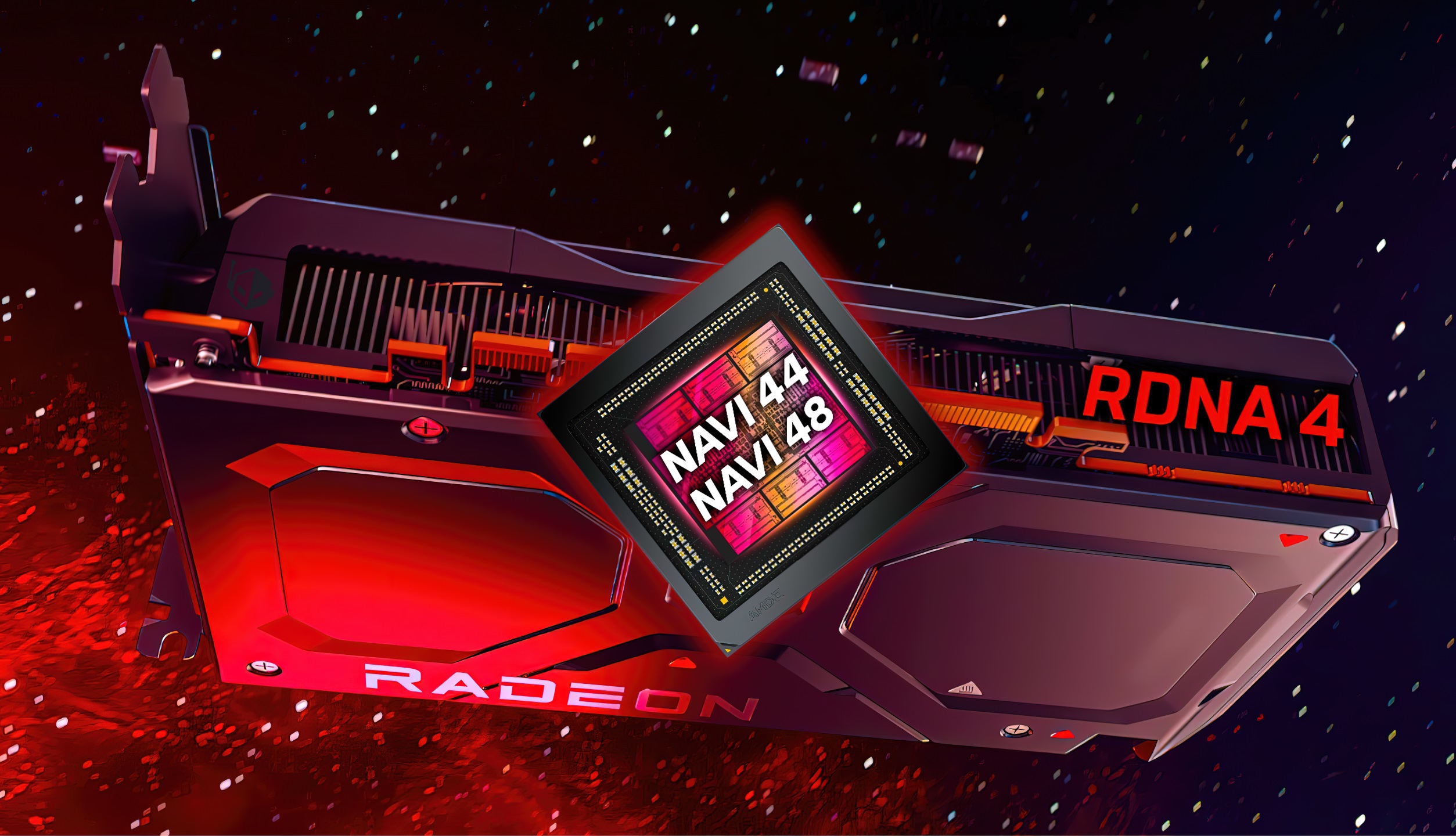
With the continued evolution of AMD’s graphics technology, the company has notably expanded its efforts to integrate RDNA 4 GPU support within the Linux kernel compute driver. This initiative heralds robust at-launch support for the forthcoming GPU architecture, signaling AMD’s commitment to Linux users.
Enhanced RDNA 4 GPU Support on Linux by AMD with Updated Drivers
As the realm of graphics technology rapidly advances, AMD seems to be keeping pace by bolstering its support for RDNA 4, codenamed GFX12. This GPU architecture is poised to be AMD’s next big leap in graphics processing, and the company is ensuring that Linux will be a supported platform from the get-go. Significant strides have been made to improve both the AMDGPU and AMDKFD kernel drivers with a strong emphasis on RDNA4-specific patches.
The AMDGPU driver now includes an array of new features such as DCN 4.0.x support and updates to various components like GC 12.0, GMC 12.0, SMU 13, and MES 12. Additionally, adjustments have been made to accommodate the new RDNA 3.5 architecture and the sophisticated Ryzen AI 300 “Strix” APUs.
Moreover, AMD has been refining its Linux kernel compute driver, which now features improved memory handling and default limits, particularly benefitting Ryzen APUs. These improvements are pivotal, given the burgeoning demand for AI capabilities in mobile computing solutions.
Support expansion includes new APUs with the highlights being the GFX1151 “Strix Halo” and GFX1152 “Krackan Point,” which will incorporate the RDNA 4 GPU.
AMD Preps Linux for Next-Gen GPU Experience
AMD’s preparations to support its upcoming GPU architecture on Linux platforms reflect thorough planning. The company has not only been updating the core drivers but has also been working on the RadeonSI OpenGL driver and collaborating with Valve on the ACO compiler enhancements. This dedicated approach promises to deliver a refined and seamless Linux gaming and application experience with RDNA 4.
This list below encapsulates the different nomenclatures and architectures associated with AMD’s GPU offerings, portraying a chronological development from the older VEGA and NAVI series towards the cutting-edge RDNA 3 and the anticipated RDNA 4:
– VEGA 10 (GFX900) through VEGA 20 (GFX906) representing the GCN 5.0 architecture.
– ARCTURUS (GFX908) and Aldebaran (GFX90A) featuring the CDNA architecture.
– NAVI series (GFX1010-GFX1012 and GFX1030-GFX1040) identified with RDNA 1 and RDNA 2 architectures.
– Latest additions like Navi 31 (GFX1100) to Navi 3X (GFX1103) introducing RDNA 3.
– Emergence of intermediary Navi 3.5 (GFX1150-GFX1152) associated with minor updates to RDNA 3.
– And the future-ready Navi 4X (GFX1200 and GFX1201) GPUs foretelling the RDNA 4 architecture.
AMD’s proactive measures in ensuring Linux compatibility and enhancing drivers months ahead of its next-gen GPU launch illustrate its intention to cater to a broader audience. By providing an improved and efficient computing environment with robust GPU support, AMD cements its role as a major player in the field of high-performance computing and gaming on Linux.


