AI Car Diagnosis Looks Futuristic, But a Cheap OBD2 Scanner Still Makes More Sense
Artificial intelligence can be incredibly useful, and large language models have already helped people solve problems that once felt impossible. From troubleshooting software issues to finding workarounds for stubborn hardware, AI tools can be powerful assistants. But not every problem needs an AI solution, especially when a simpler, cheaper, and safer tool already exists.
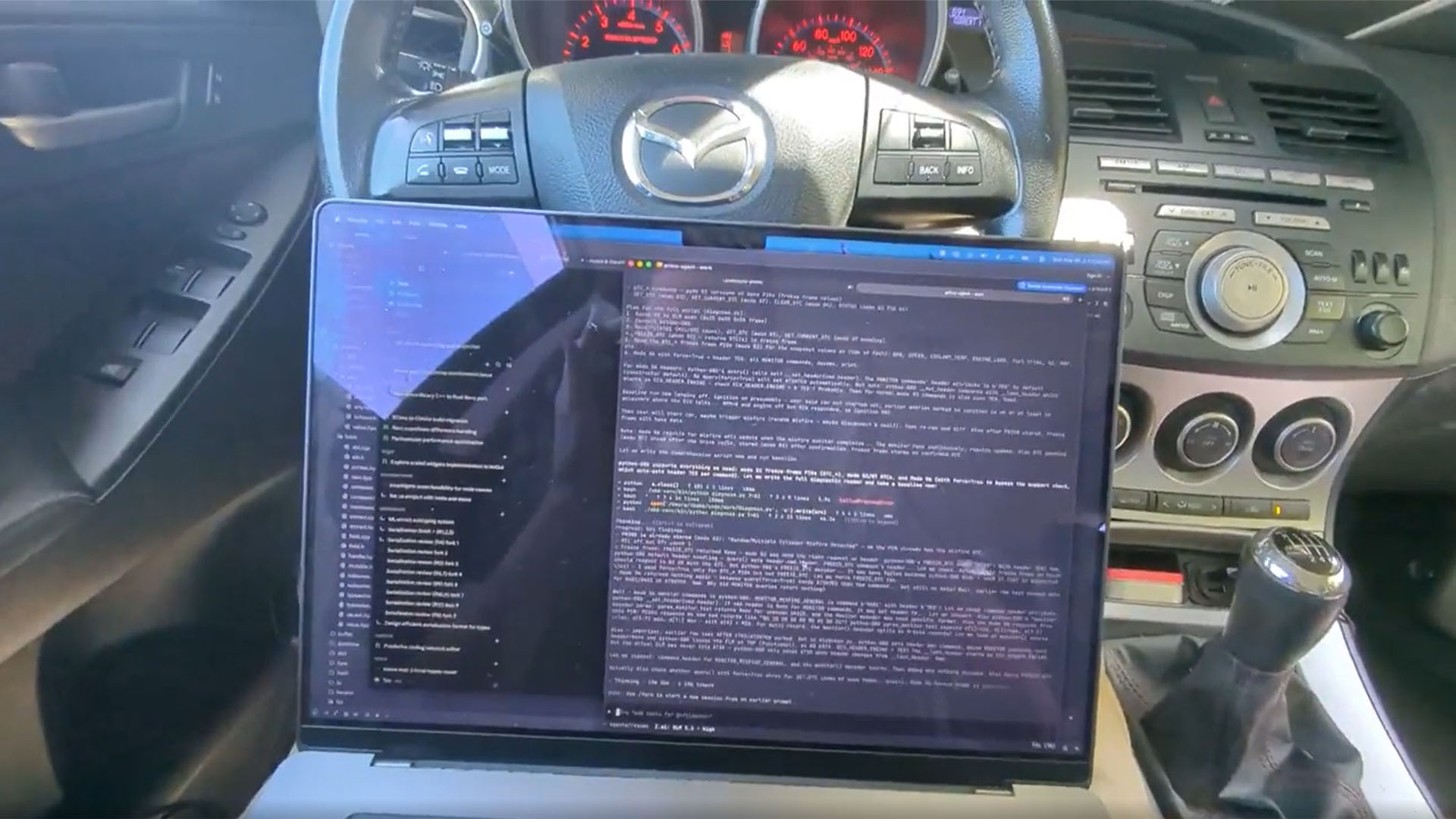
A recent example making the rounds online shows a car owner connecting a laptop to a vehicle’s computer system to diagnose an engine problem using a large language model. The setup certainly looked futuristic, and some described it as having a “cyberpunk” feel. The laptop appeared to be connected directly to the car’s onboard system while the AI attempted to interpret the issue and figure out what might be wrong.
It may look impressive at first glance, but the situation raises an important question: was AI really necessary?
For most car engine warning lights and diagnostic trouble codes, the answer is probably no. A basic OBD2 scanner can usually do the job faster, more conveniently, and at a much lower cost. These compact diagnostic tools are widely available, often priced around $30, and can read engine error codes from most modern vehicles. Once the scanner displays the code, the car owner can look it up, understand the likely cause, and decide whether the problem needs immediate attention or a visit to a mechanic.
Compared to carrying around a laptop and relying on an AI model, an OBD2 scanner is far more practical. It is small enough to fit in a glove box or trunk, does not require a complicated setup, and is designed specifically for vehicle diagnostics. For drivers who want a quick answer when the check engine light appears, it remains one of the easiest and most reliable tools to keep in the car.
There is also the safety concern. Large language models are known to occasionally produce incorrect or misleading information, often referred to as hallucinations. That may be harmless when asking for general advice, but it becomes much more serious when connected to a vehicle’s computer system. Cars involve critical systems, and allowing an AI tool to interact with vehicle functions without clear limits could introduce unnecessary risk.
Using AI to explain an error code after it has been safely retrieved is one thing. Giving an AI system access to a car’s electronics is another. If the AI misinterprets data or suggests the wrong action, the consequences could be costly or even dangerous, particularly if someone tries to rely on it while driving.
This does not mean AI has no place in automotive repair. In the future, AI-powered diagnostic tools could become more common, helping mechanics identify complex faults, compare symptoms, and recommend repair steps more efficiently. AI could also help drivers better understand maintenance schedules, repair estimates, or technical explanations in plain language.
However, for a typical engine trouble code, traditional diagnostic tools still make more sense. An OBD2 scanner can quickly identify the problem code, after which the driver can research the issue or take the vehicle to a qualified technician. It is simple, affordable, portable, and purpose-built for the task.
The viral laptop-and-AI car diagnosis may look like a glimpse into the future, but in everyday use, it is more complicated than it needs to be. Sometimes the smartest solution is not the most advanced one. For diagnosing a check engine light, a pocket-sized OBD2 scanner remains the better tool for most drivers.