TSMC CoWoS Prices Could Rise Up to 20% as AI Chip Demand Strains Advanced Packaging Supply
TSMC’s CoWoS advanced packaging technology may be headed for another price increase, as demand for AI processors continues to stretch the company’s production capacity. According to supply chain chatter cited by China Times, a price hike of as much as 20% is reportedly being discussed, although TSMC has not officially confirmed the move.
The potential increase highlights just how important CoWoS has become in the artificial intelligence hardware boom. As AI accelerators grow more powerful, chip designers are packing more compute dies and high-bandwidth memory stacks into a single package. That makes each chip more capable, but it also makes the packaging process more complex, slower, and more expensive.
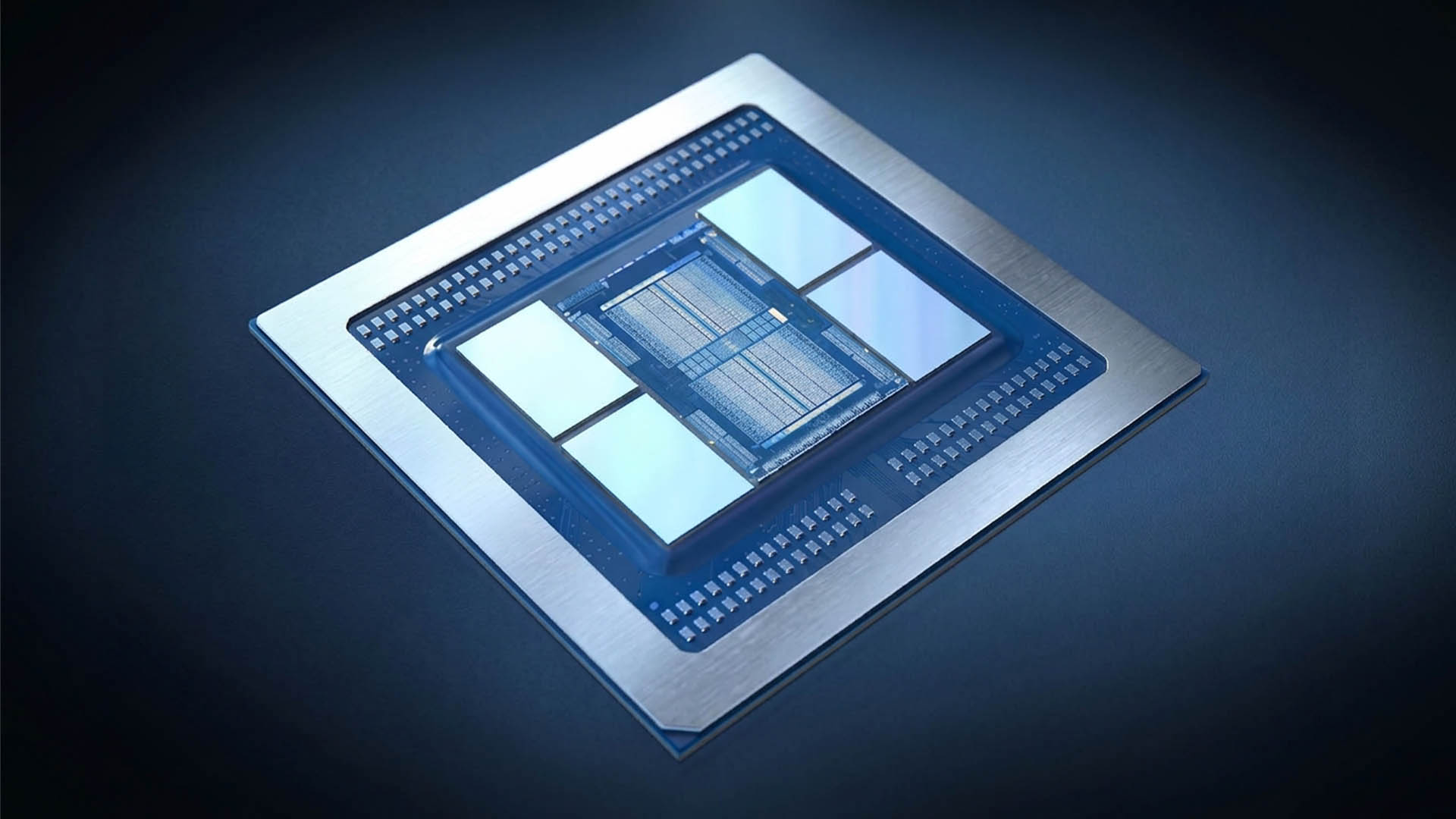
CoWoS, short for Chip-on-Wafer-on-Substrate, has become one of the most important technologies behind today’s high-end AI chips. It allows powerful processors and HBM memory to sit close together on a silicon interposer, enabling the extremely fast data transfer rates needed for AI training and inference. For companies building cutting-edge AI accelerators, this type of advanced packaging is no longer optional. It is a critical part of performance.
The problem is that demand is rising faster than supply.
As AI chips become larger and more complicated, they take longer to manufacture and test. Adding more compute dies and more HBM stacks increases package size and production difficulty. Larger packages also reduce the number of units that equipment can process in a given amount of time. In other words, even if a customer is ordering the same number of chips, TSMC may need more tools, more time, and more capacity to produce them.
Testing is another bottleneck. AI processors require extensive validation before they can be shipped, and the testing stage is now under pressure alongside packaging. This means the constraint is not limited to one part of the production chain. Packaging, testing, tooling, and component supply are all being squeezed at once.
Some may argue that TSMC has the financial strength to expand CoWoS capacity, and that is true. However, advanced packaging expansion is not something that happens overnight. Industry sources suggest that a new advanced packaging facility can take around three years to reach full production at its most constrained stations. Even after construction is completed and equipment is installed, the tools must be calibrated, qualified, and validated before output becomes stable.
Equipment lead times are also getting longer. Tools that previously took around three to six months to arrive are now reportedly taking six to eight months, as suppliers of critical components are also running close to full capacity. This makes it harder for TSMC to quickly respond to surging AI demand, even with aggressive investment.
TSMC is reportedly working to expand CoWoS production significantly over the next few years. The company is said to be targeting around 130,000 monthly wafers in 2026 and aiming for 200,000 units in 2027. One of its U.S. facilities is also expected to begin production in 2028, which could help ease pressure in the longer term.
For now, however, supply remains tight, and that gives TSMC strong pricing power.
The possibility of a 20% price increase also suggests that CoWoS remains the preferred advanced packaging option for many AI chip developers, despite alternatives in the market. Intel’s EMIB technology, for example, uses small silicon bridges embedded in an organic substrate rather than a full silicon interposer. EMIB can be effective for certain designs and may use less silicon, but CoWoS is widely viewed as better suited for very large packages with heavy HBM requirements.
That distinction matters because modern AI accelerators depend heavily on memory bandwidth. High-bandwidth memory must be placed close to the compute dies to reduce latency and improve efficiency. CoWoS has built a strong reputation in this area because it supports extremely dense interconnections, which are essential for the largest and most powerful AI chips.
TSMC has also built a mature ecosystem around CoWoS. Major GPU and custom ASIC designers have already developed their design flows, testing processes, and memory partnerships around the technology. That makes CoWoS a lower-risk path for companies racing to launch AI hardware on tight schedules.
EMIB still has its advantages. Supporters point to its lower silicon usage and its potential value as a second-source option when CoWoS capacity is fully booked. For some designs, it may offer an attractive balance of cost and performance. But for the biggest AI chips with multiple HBM stacks, TSMC’s CoWoS remains the safer and more established choice.
This is why customers may accept a higher price rather than risk delays or redesigns. In the AI chip market, time to market can be more important than a packaging price increase. Companies competing in artificial intelligence infrastructure need reliable access to advanced packaging, and many have already built their products around TSMC’s technology.
If the reported price hike moves forward, it would reflect the broader reality of the semiconductor industry in the AI era. The bottleneck is no longer only about producing advanced logic chips on leading-edge process nodes. Packaging has become just as important, and in some cases, just as constrained.
TSMC’s CoWoS technology sits at the center of that shift. With AI demand still climbing, HBM usage increasing, and chip packages growing larger, advanced packaging capacity is becoming one of the most valuable resources in the semiconductor supply chain.
For AI chipmakers, the message is clear: securing CoWoS capacity may become more expensive, but it remains essential for competing at the highest end of the market.


