AI Server Boom Drives Strong Demand for Power Management Chips as Mature-Node Supply Tightens
The rapid expansion of artificial intelligence infrastructure is reshaping the semiconductor market, and one of the biggest beneficiaries is the power management IC segment. As AI servers require massive amounts of stable and efficient power, demand for power management chips has continued to rise, helping accelerate the recovery of mature-node semiconductor manufacturing.
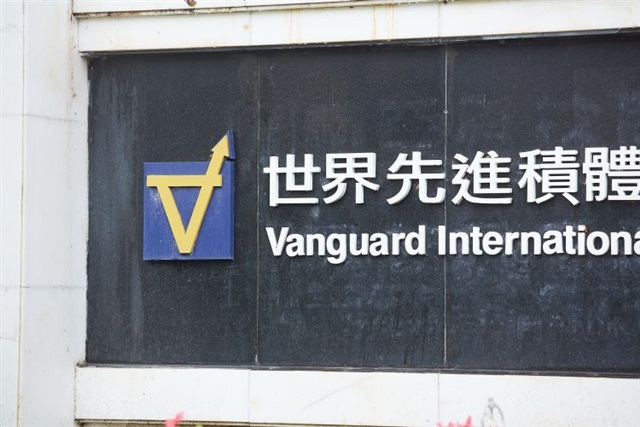
Vanguard International Semiconductor has indicated that AI-related chip demand is not simply a temporary market rebound. Instead, the company views it as a long-term structural shift that could keep mature-node capacity tight for several years. According to the company’s outlook, supply for mature process technologies may remain constrained through 2027.
Power management ICs, often called PMICs, play a critical role in AI servers. These chips regulate, distribute, and optimize power across processors, memory, accelerators, storage, and other components. In traditional computing systems, power management is already important, but in AI servers the challenge is much greater. High-performance AI workloads rely on power-hungry GPUs, AI accelerators, and advanced networking components, all of which require precise and reliable power delivery.
This growing need is boosting demand for semiconductor processes that are not necessarily the most advanced nodes. While cutting-edge chips often receive the most attention, many essential components in AI servers are built using mature-node technologies. These include PMICs, display driver ICs, microcontrollers, sensors, and various analog chips. Mature nodes remain highly valuable because they offer proven reliability, stable production yields, and cost efficiency for many types of components.
The increased demand from AI servers is helping reverse the weakness that affected parts of the mature-node chip market during previous inventory corrections. After a period of slower demand in consumer electronics, the rise of AI data centers is creating a new growth engine for foundries focused on mature process production.
Vanguard International Semiconductor’s outlook suggests that the recovery in mature-node processes may be stronger and longer-lasting than previously expected. The company believes AI-driven demand is becoming an irreversible trend, supported by the ongoing buildout of data centers, cloud AI platforms, enterprise AI systems, and high-performance computing infrastructure.
The expected shortage through 2027 could have broad implications for the semiconductor supply chain. If demand continues to outpace available capacity, prices for mature-node chips, especially power management ICs, may remain firm. This could benefit foundries and chip suppliers with strong mature-node manufacturing capabilities, while also pushing server makers and electronics companies to secure supply earlier.
AI servers are also changing how the industry views semiconductor value. Advanced processors remain central to AI performance, but supporting chips are becoming just as important to system stability and efficiency. Without reliable power management, even the most powerful AI accelerators cannot operate at their full potential. This makes PMICs a key part of the AI hardware ecosystem.
As global companies continue investing in artificial intelligence, the demand for efficient power solutions is expected to grow alongside server deployments. More AI workloads mean more data centers, more server racks, and more chips required to manage power consumption. This creates a long-term opportunity for mature-node foundries that can support large-scale production of essential analog and power-related components.
The semiconductor market is entering a new phase where AI is not only driving demand for advanced logic chips but also lifting older, well-established manufacturing processes. For mature-node suppliers, this shift could bring improved utilization rates, stronger pricing power, and more stable long-term demand.
With AI infrastructure expanding rapidly, power management ICs are becoming a crucial foundation of next-generation computing. If current trends continue, mature-node capacity may remain under pressure for years, reinforcing the importance of these often-overlooked chips in the global AI race.