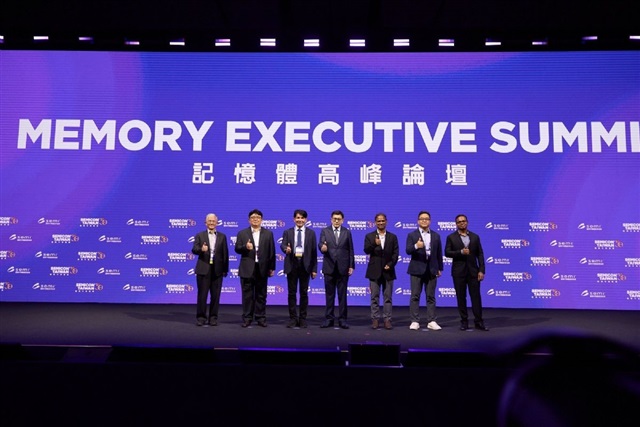
Artificial intelligence is reshaping the memory market, and high-bandwidth memory is now the linchpin of modern AI systems. As model sizes swell and training datasets explode, the ability to move data quickly and efficiently matters as much as raw compute. That’s where HBM steps in, delivering massive bandwidth in a compact footprint and transforming how accelerators are designed, cooled, and deployed at scale.
The “big three” memory makers are treating advanced memory as a strategic battleground. Instead of one-size-fits-all products, they’re racing to deliver customized HBM tailored to specific AI workloads and accelerator designs. The result is a surge of co-engineered solutions that blend performance, power efficiency, and thermals to squeeze every last bit of throughput from GPUs and purpose-built AI chips.
Why HBM is now core to AI
– Bandwidth at scale: Training and inference rely on feeding compute units with data at blistering speeds. HBM’s wide interface and 3D-stacked architecture deliver the multi-terabyte-per-second bandwidth elite models demand.
– Energy efficiency: By bringing memory closer to compute with through-silicon vias and advanced packaging, HBM slashes data movement energy, improving performance per watt in power-constrained data centers.
– Dense capacity: Stacked dies provide high capacity in a small footprint, enabling larger batch sizes, bigger context windows, and more complex model architectures without sprawling PCB real estate.
The new race: customized HBM
– Speed bins and stack heights: Vendors are offering multiple speed grades and stack configurations (such as 8-Hi and 12-Hi) to hit targeted performance, capacity, and cost points for different AI accelerators.
– Thermal tuning: Not all AI systems cool the same way. Custom thermal designs, materials, and heat spreader strategies help maintain signal integrity and reliability at higher speeds.
– Power profiles: Memory tuned for specific voltages, timings, and controller parameters reduces wasted power and improves stability, especially in dense multi-accelerator servers.
– Reliability features: Enhanced RAS options, including on-die ECC and improved error handling, are being fine-tuned for 24/7 training clusters where uptime is critical.
– Packaging partnerships: Close collaboration with foundries and OSATs on 2.5D/3D packaging, interposers, and advanced substrates is becoming a differentiator, not a checkbox.
Supply, yield, and qualification are strategic levers
– Capacity is tight: Rapid AI demand means HBM supply remains constrained, especially for the newest speed grades. Securing long-term capacity is now a board-level priority for cloud providers and AI startups alike.
– Packaging bottlenecks: Advanced packaging capacity can be as limiting as the memory itself. Vendors are investing heavily to expand throughput and improve yields on complex stacks.
– Long qualification cycles: AI customers require rigorous validation for thermals, stress, and reliability. That lengthens time-to-market and raises the bar for consistent quality across batches.
Today’s rollout and the road ahead
– HBM3 and HBM3E are the workhorses of current AI training clusters, offering higher bandwidth and better efficiency than earlier generations.
– Next-generation HBM will push interface speeds even higher while tackling thermal density and power delivery challenges. Wider interfaces, refined TSV processes, and new materials are all part of the playbook.
– Expect tighter co-design with accelerator makers. Memory and compute will be planned together from the outset, aligning controller IP, signal integrity, and layout to hit aggressive performance targets.
What this means for AI buyers and builders
– Performance per watt will define winners. With power budgets under pressure, the right HBM configuration can unlock significant TCO savings over the life of a deployment.
– Customization pays off. Matching memory speed, capacity, and thermals to specific models and workloads can deliver outsized gains compared to generic parts.
– Plan for lead times. Securing allocation, packaging slots, and validated lots early will be essential for large-scale rollouts in 2025 and beyond.
Bottom line
The surge in AI has turned HBM from a niche technology into the backbone of high-performance training and inference. The leading memory makers are responding with a wave of customized solutions designed hand-in-hand with accelerator vendors. As bandwidth, efficiency, and reliability become the defining metrics of AI infrastructure, the race to deliver tuned HBM will shape who leads the next phase of the AI era.


