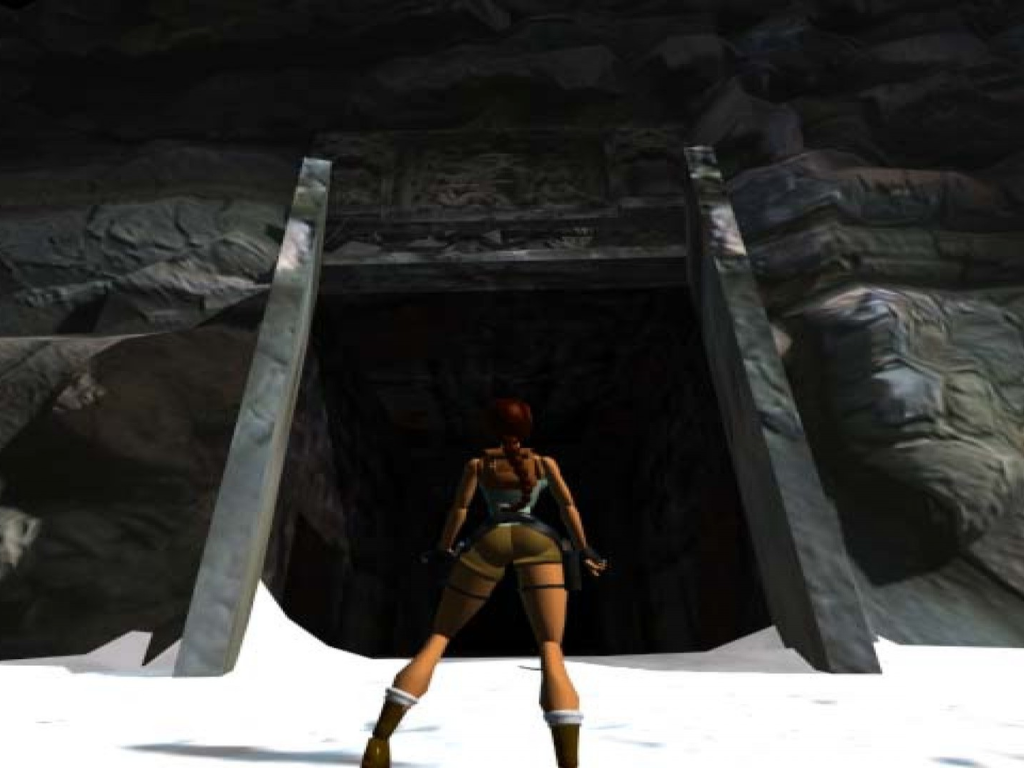
Nearly 30 years after an official Nintendo 64 version of Tomb Raider was shelved, the legendary 1996 adventure is finally making its way to Nintendo’s 64-bit console—thanks to a fan-made, work-in-progress homebrew port.
On April 13, developer and YouTuber Snake shared a short demo showing Tomb Raider running on an Analogue 3D using “Unleashed” overclock settings. The footage highlights Lara Croft exploring Croft Manor, moving through the opening level, and visiting Palace Midas—an exciting glimpse of what could become one of the most impressive retro homebrew projects in recent memory. Even in its unfinished state, seeing the original Tomb Raider operating in a Nintendo 64 environment feels like a long-awaited “what if?” moment coming to life for longtime fans.
What makes this effort even more notable is that it’s being built as an open-source-style endeavor using established community tools. Snake is developing the port from the ground up using Lost Artefact’s TRX decompilation approach, which reimplements Tomb Raider I and II while also adding various bug fixes and quality-of-life improvements. That foundation helps explain how the project has advanced far enough to show recognizable locations and gameplay flow while still being early and rough around the edges.
On the technical side, the port uses the Tiny3D graphics library for Nintendo 64 alongside libdragon, a popular open-source development toolkit for the console. Snake describes the game as “pretty much implemented,” but also emphasizes that there are still plenty of bugs, plus rendering and performance problems. Performance reportedly drops sharply in larger, more open areas—an expected challenge given the Nintendo 64’s limitations and the complexity of Tomb Raider’s fully 3D environments.
One of the most jaw-dropping details is storage. The original game is often associated with hundreds of megabytes of content across platforms of its era, yet this port reportedly fits almost entirely on a 64 MB Nintendo 64 cartridge image, including all the music and most full-motion video content. Even allowing for differences in formats and implementation, squeezing a game of Tomb Raider’s scope into that space is a major technical feat and a reminder of how far clever optimization and modern tooling can push classic hardware.
That said, the project isn’t close to a polished, plug-and-play release. Right now, it performs best with overclocking enabled on the Analogue 3D, and Snake has not confirmed a release date or whether a downloadable ROM will be made available at all. For now, the port stands as an ambitious proof of progress rather than a guaranteed public launch.
The timing is especially poetic because Tomb Raider on Nintendo 64 almost happened the first time around. Back in the 1990s, an official port was reportedly in development at Core Design. Former team members have said the plan was real—but development hardware didn’t arrive in time. Not long after, an exclusivity agreement for the sequel helped seal the fate of the N64 version, and Lara Croft never officially made the jump to Nintendo’s console.
Now, decades later, a community-driven effort is bringing that lost chapter back into the spotlight. Even if it remains unfinished or never publicly released, the Tomb Raider Nintendo 64 homebrew port has already accomplished something special: it has turned a cancelled piece of gaming history into a playable reality.


