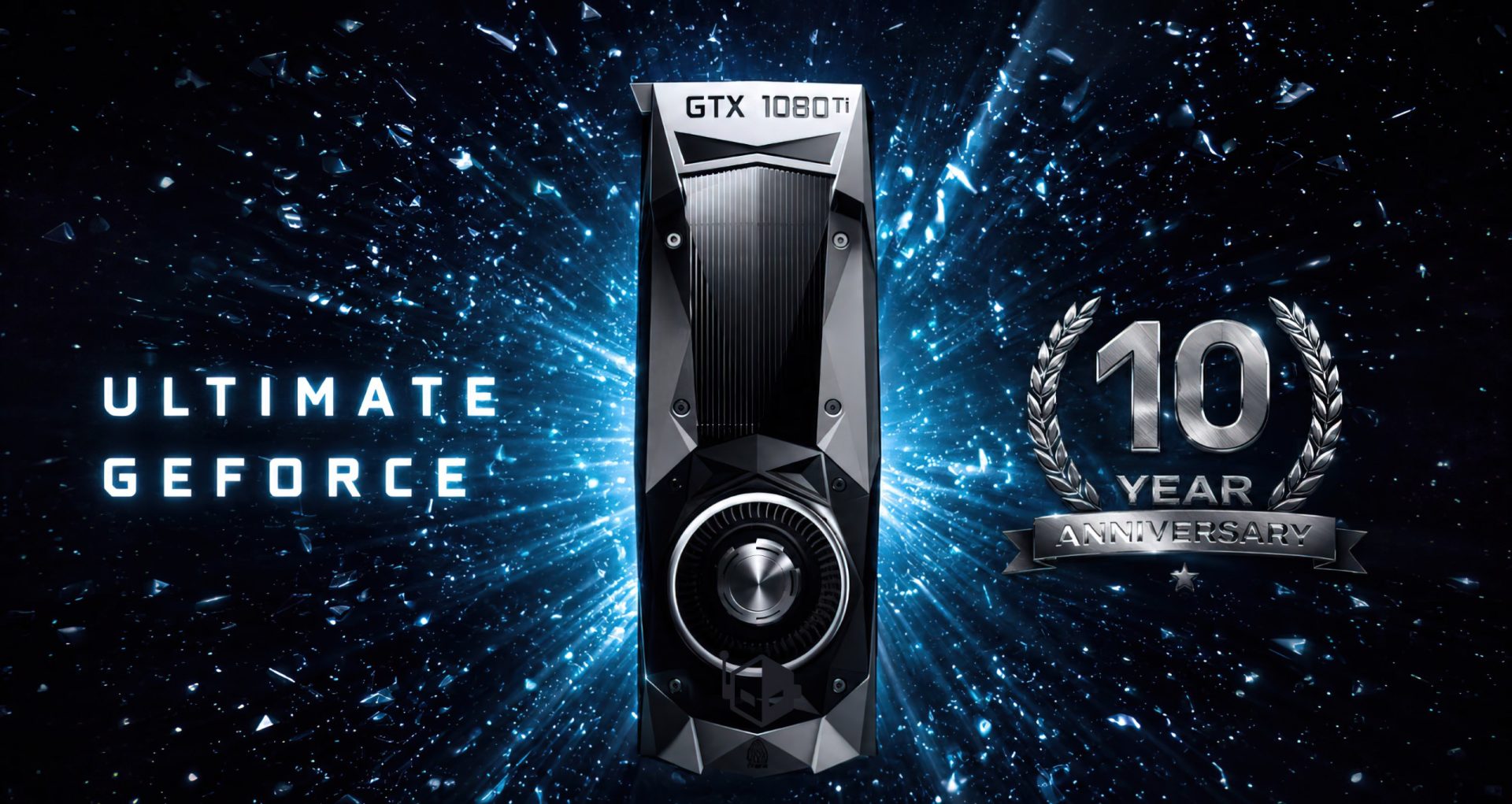
Before RTX took over PC gaming conversations, there was GTX. And even a decade later, NVIDIA’s GeForce GTX 10-series “Pascal” graphics cards still have a loyal fan base for one simple reason: they represented one of the biggest, most exciting leaps in GPU performance many PC gamers had ever seen.
It was May 2016 when NVIDIA introduced the first Pascal-based GeForce GTX 10 series GPUs. Looking back 10 years later, the gaming graphics world feels almost unrecognizable compared to that era, but the memories of the GTX 1080 launch window are still easy to understand for anyone who lived through it.
The early Pascal demos quickly became part of PC gaming folklore. Many still remember the GeForce GTX 1080 showing off DOOM (2016) at frame rates blasting beyond 200 FPS, the kind of moment that instantly sold people on an upgrade. Games like The Witcher 3 also benefited massively from the added horsepower, with enthusiasts pushing higher settings and leaning into extras like Fur and Hairworks for more visual flair. Just as important, Pascal arrived with a combination that’s always been a winning formula: very high clock speeds (often exceeding 2 GHz), strong overclocking headroom, and impressive power efficiency. Even compared to the already well-regarded GeForce GTX 900-series “Maxwell” cards, Pascal felt like a clear step forward.
The competitive timing mattered too. Around the same period, AMD was preparing its Radeon RX Vega lineup. But by the time Vega was ready for the fight, NVIDIA didn’t just have the GTX 1080 on shelves. It had unleashed the GeForce GTX 1080 Ti, a card that delivered a surprise jump in real-world performance and shifted expectations overnight. That one-two punch helped NVIDIA maintain a dominant position for years, and it’s a major reason the 1080 Ti is still spoken about with so much respect in PC hardware circles.
One of the underappreciated strengths of the GTX 10 family was how widely it scaled across the market. Pascal stretched from truly entry-level options like the GT 1010 with 2 GB of memory, all the way up to enthusiast-tier cards such as the GTX 1080 Ti with 11 GB of VRAM and the Titan Xp with 12 GB. Whether you were building a budget esports machine or chasing max settings at higher resolutions, there was likely a Pascal card that fit the plan.
Nostalgia hits extra hard because Pascal came from a simpler chapter in PC graphics. This was an era before AI features became headline attractions, before upscaling and path tracing dominated performance discussions, and before GPUs added dedicated hardware for new rendering approaches. Back then, the focus felt more straightforward: more shader throughput, more compute, higher clocks, and increasing VRAM to support higher-quality textures and richer game assets. It was largely about raw rasterization performance and efficient design, and for many gamers that clarity is part of what makes the GTX 10 series so easy to romanticize.
That doesn’t mean modern graphics advancements are bad. Technologies like ray tracing, DLSS, and newer neural rendering ideas are genuinely impressive and have moved the industry forward. But they also mark a clear turning point. The PC gaming landscape has changed dramatically, and while some players love the cutting edge, others still miss the era when brute-force performance gains were the main story.
It’s also true that game visuals have evolved enormously over the past decade. Plenty of older titles looked mind-blowing in their time, and it’s natural to feel nostalgic about them. But if you compare the PC gaming showcases of yesterday to what’s possible now, the difference is enormous. Once upon a time, Crysis was the benchmark conversation. Today, games like Cyberpunk 2077 set a new bar for visual density and atmosphere, and modern releases such as Alan Wake 2, Dead Space Remake, and other big cinematic productions push fidelity and immersion far beyond what most of us imagined during the GTX 10 era.
Interestingly, the next major shift arrived quickly. Only about a year after the GTX 1080 Ti made waves, NVIDIA launched the GeForce 20-series “Turing” GPUs. That lineup introduced the RTX branding and brought ray tracing and DLSS into the mainstream conversation, permanently changing how PC graphics performance is measured and marketed.
Still, the GeForce GTX 10 series deserves its place in GPU history. It delivered a rare mix of strong performance, excellent efficiency, and a sense of value that left a lasting impression. For many PC gamers, Pascal wasn’t just another generation of graphics cards. It was the upgrade that made games feel new again.
Did you ever own a GeForce GTX 10-series GPU? If so, which model did you have?