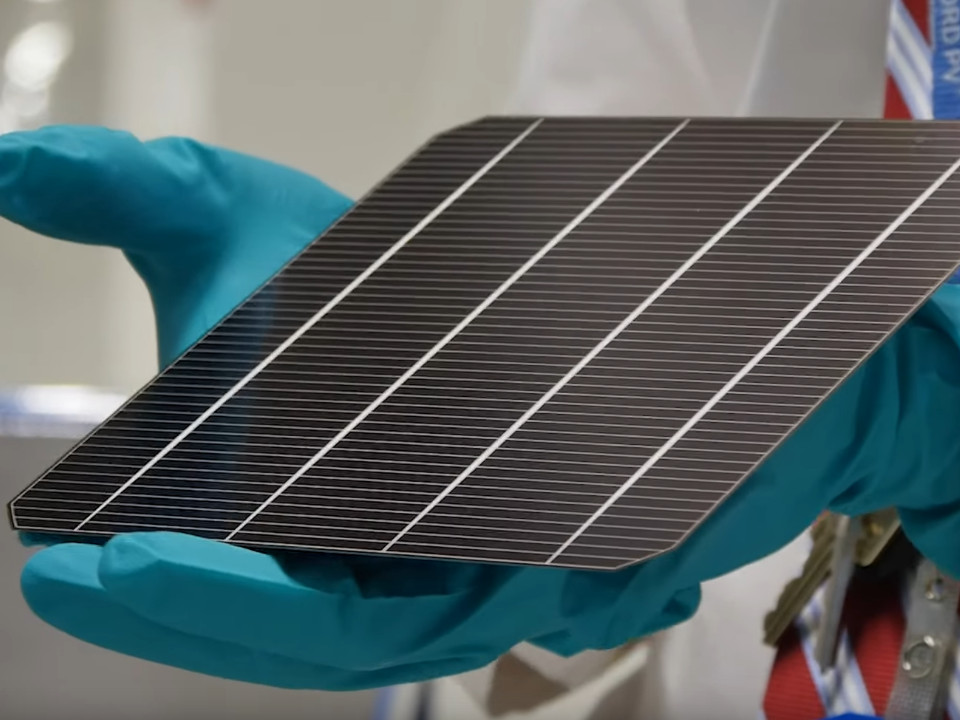
Solar energy technology is taking a significant leap forward in Brandenburg, Germany, as production commences for one of the most efficient photovoltaic (PV) modules to date. These advanced solar modules, which incorporate a perovskite layer, are setting a new industry benchmark with an impressive 27 percent efficiency in converting sunlight to electricity.
The efficiency of these innovative solar cells has been certified by the renowned photovoltaic calibration laboratory at the Fraunhofer Institute. Oxford PV, the company behind this breakthrough, prides itself on being at the forefront of serial production for high-performing solar modules.
The key to achieving such high power yield lies in the addition of a perovskite layer to the silicon solar cell. Perovskite, a material that specializes in converting specific parts of the light spectrum and allowing the rest to pass through, optimizes light utilization when used in tandem with traditional cells. Hypothetically, efficiency rates could surpass 40 percent, though this figure is curtailed due to the need for extra protective layers to ensure the perovskite’s durability.
This upgrade is significant when compared to earlier iterations of solar cells with perovskite components, which hovered around 20 percent efficiency but suffered from rapid efficiency loss over time. The leap to nearly 27 percent efficiency marks a potential 30 percent boost in electricity yield from the same surface area, making it a game-changer for solar energy production, especially when considering the upgrade of older, less-efficient solar modules.
The unveiling of these next-generation solar modules is currently taking place at the prestigious Intersolar Europe trade fair. Each module spans 1.6 square meters and maintains a weight under 25 kilograms, perfectly aligning with standard roofing dimensions. This seamless integration reflects a meticulous consideration of residential and commercial applications, ensuring that installation is both practical and efficient.
Since 2008, the solar module factory in Brandenburg an der Havel has stood as a pillar of innovation. Acquired by Oxford PV in 2016, it has continually surpassed expectations in tandem cell production. While the 26.9 percent efficiency may not reach the theoretical maximum, it represents a significant milestone for mass production, balancing performance with affordability.
The integration of such high-efficiency solar cells offers immense promise for the future of renewable energy. As society shifts towards more sustainable and environmentally friendly energy solutions, these advancements contribute to a greener, more efficient utilization of solar power.
For individuals and organizations looking to embrace renewable energy, the practical steps involved include:
1. **Researching** the latest solar module technologies to understand the benefits of high-efficiency panels.
2. **Evaluating** their current energy consumption and how the switch to solar could impact their energy bills and carbon footprint.
3. **Considering** the available space for installation and potential energy yields, factoring in the efficiency gains from the latest solar cells.
4. **Consulting** with solar energy experts and companies to get personalized advice tailored to their specific energy needs and roofing configurations.
5. **Investing** in advanced solar technology to maximize long-term benefits, both environmentally and financially.
As society continues to evolve, staying informed on such cutting-edge trends and breakthroughs in solar technology is essential for fostering a more sustainable world.