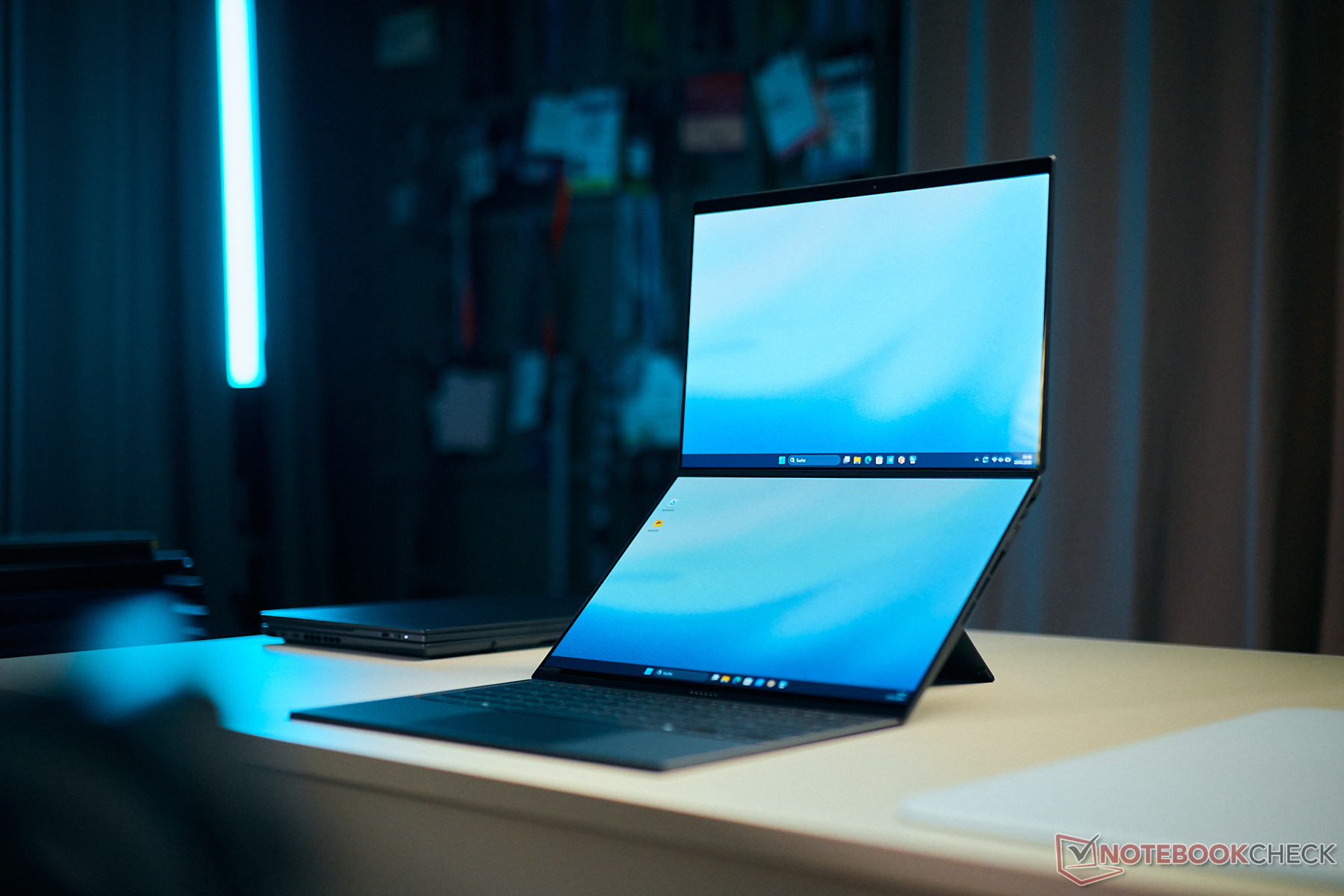
ASUS has refined its dual-screen laptop formula with the 2026 Zenbook Duo UX8407, and the upgrades go far beyond simply adding a second display. This year’s model focuses on the things that matter most in daily use: battery life, typing comfort, display quality, and practical performance that doesn’t come with constant fan noise.
One of the biggest improvements is the battery. ASUS has increased capacity to 99 Wh, up from 75 Wh on the previous model. In real-world terms, that larger battery translates to impressively long runtimes, even when you’re actively using both screens. For a dual-OLED laptop that’s designed to encourage multitasking, that kind of endurance is a major advantage—especially for students, creators, and professionals who don’t want to be tethered to a charger.
The typing experience is also better than before. The removable keyboard now offers 1.7 mm of key travel and feels extremely sturdy, whether it’s attached to the device or used separately. That extra stability and travel makes it genuinely comfortable for long writing sessions, spreadsheets, work messages, or coding—often feeling better than what you get on many traditional laptops.
Of course, the highlight is still the dual OLED setup, and ASUS has strengthened its lead here as well. Every 2026 Zenbook Duo model comes with the same high-resolution 144 Hz touchscreen displays, along with improved brightness that lands around 500 nits in SDR and can reach up to 1,000 nits in HDR. Image quality is described as excellent, and the consistency between both panels is a big deal: you can move windows and content from one screen to the other without distracting differences in color, brightness, or overall look. For anyone who edits visuals, manages multiple apps, or likes a clean workflow across both screens, that uniformity helps the dual-screen concept feel more seamless and less like a compromise.
In terms of portability, the Zenbook Duo is slightly bulkier than the previous generation, but the overall size and especially the lower weight are said to be very good considering the hardware and build quality. Still, it’s worth being honest about who this laptop is for. If you don’t truly benefit from two displays, a comparable single-screen laptop with similar performance will generally be slimmer and lighter. The Zenbook Duo makes the most sense when you actually use what makes it different—running documents and research side-by-side, spreading out timelines, monitoring chats while presenting, or keeping tools on one screen and your main work on the other.
Performance gets another boost thanks to the new Intel Panther Lake processor. It delivers strong results, particularly when paired with slower performance profiles—meaning you can still get plenty of speed for everyday productivity without the constant distraction of loud fan noise. That balance of smooth performance and quieter operation fits the Zenbook Duo’s role as a premium productivity machine, not just a spec sheet showcase.
Put it all together and the 2026 ASUS Zenbook Duo UX8407 shapes up as a polished, well-rounded dual-screen laptop. The bigger battery, improved keyboard, brighter and better-matched OLED displays, and efficient Intel Panther Lake performance all reinforce the same message: this is a versatile, practical multitasking setup that feels more complete than before—as long as you’re the kind of user who will truly take advantage of two screens.


