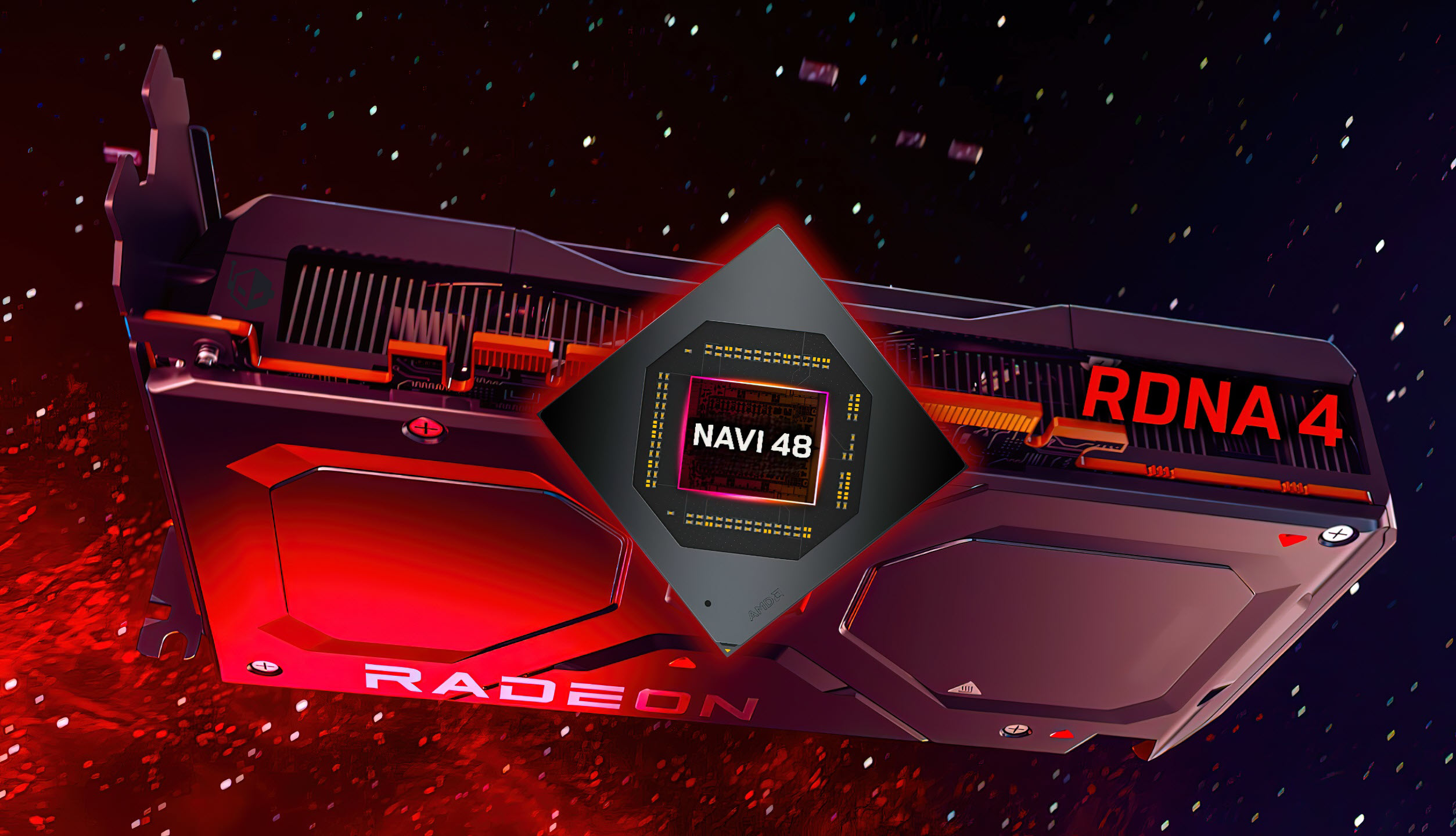
The MESA RADV Vulkan driver, revered as an open-source alternative for Linux systems, has been updated to accommodate AMD’s next-generation “GFX12” RDNA 4 GPU architecture. This development signifies a strengthening of Linux’s graphic driver capabilities and competition against AMD’s own proprietary drivers.
The enablement of the AMD “GFX12” RDNA 4 GPUs on the Linux platform has taken a giant leap with recent contributions. Notably, a substantial body of code has been incorporated, paving the way for the architecture’s support. As a result, the community, including Valve engineers, invests efforts into the RADV Vulkan driver to ensure that the hardware will be fully supported upon its release.
The merge requests that have made this progress possible, spearheaded by industry contributors, have introduced support for the architecture’s assembler and brought minor adjustments to enhance the support of the new GPU technology. The changes facilitate a smoother embrace of the upcoming GPU generation for Linux users.
The RADV Vulkan driver’s performance has differentiated itself as a robust option, outmatching the official AMDVLK driver in certain respects. Its capability to enhance and optimize features, such as ray tracing on RDNA GPUs, has yielded substantial performance gains, offering users an attractive alternative to mainstream graphic driver options.
The expected integration of the RDNA 4 “GFX12” GPU support is set to appear in the MESA 24.2 quarterly update. Looking ahead, if the official release of the new hardware is targeted for later parts of 2024, Linux is well on track to fully harness the new GPUs immediately after their official launch. Earlier disclosures revealed two SKUs associated with this update, the GFX1201 and GFX1200, which are speculated to correspond to the Navi 48 and Navi 44 dies respectively.
Below is an overview of AMD’s RDNA generational GPU lineup, tracing the significant leaps from Radeon RX 5000 series through to the forthcoming Radeon RX 8000 series. Each generation showcases the evolution in architecture and die configurations, culminating in expectations for the RDNA 4 series which will feature Navi 4X GPU family.
The Radeon lineup evolution has seen multiple architectural progressions, starting from the RDNA 1 architecture found in Radeon RX 5000 series with 7nm process node technology. The RDNA 2 followed suit in the Radeon RX 6000 with similar 7nm node, then RDNA 3 with a mix of 5nm/6nm process technology in the Radeon RX 7000 series. The upcoming RDNA 4 architecture expected to be incorporated into Radeon RX 8000 series is anticipated to feature advanced process technology possibly as refined as 3nm.
In summary, the open-source community, through collective efforts and contributions, is eagerly anticipating the full-scale support of AMD’s RDNA 4 “GFX12” GPUs. This eagerness reflects a steadfast commitment to providing robust graphic driver support that aligns with the latest advancements in GPU technology for Linux users.